

Key Takeaways
- Video post-production is where raw footage becomes a finished story.
- Professional editing improves pacing, clarity, emotion, and brand quality.
- The video post-production process includes editing, audio mixing, colour grading, graphics, and delivery formatting.
- Different video styles require different post-production approaches.
- AsiaWorks helps brands manage editing, revisions, multi-platform delivery, and final exports professionally.
Table of Contents
The real magic of video rarely happens on set. Post-production is where the story comes alive.
Raw footage alone rarely feels polished, emotional, or cinematic. Instead, it is the editing phase that transforms seemingly disconnected clips into a compelling brand story. That is why video post-production has become one of the most important parts of modern content creation.
For brands, post-production is where messaging becomes clearer, pacing improves, and emotional impact takes shape. Sound design, music, colour grading, graphics, and editing decisions all influence how audiences respond to a video.
Today, audiences expect professional-quality content on every platform. Consequently, businesses cannot rely on basic editing alone. Strong video editing and post-production helps companies create content that feels credible, modern, and engaging.
In this guide, we break down the complete video post-production process, including editing stages, revision workflows, costs, platform delivery, and professional post-production tips from AsiaWorks.
What is Video Post-Production and Why Does It Matter?
So, what is video post-production?
Simply put, it is the final stage of filmmaking where raw footage is organised, edited, enhanced, and prepared for distribution.
A clear video post-production definition would be:
The process of transforming raw footage into a polished final video through editing, sound, graphics, and colour enhancement.
What happens in post-production is often what separates an amateur-looking video from a professional marketing asset.
A great shoot alone does not guarantee a strong result. Even beautifully filmed footage can feel slow, confusing, or emotionally flat without professional editing.
A great editor can completely transform how a video feels. They control pacing, emotional rhythm, storytelling clarity, and audience attention frame by frame. Even beautifully shot footage can feel slow or confusing in the wrong hands, while a skilled editor can turn simple footage into something cinematic, engaging, and memorable.
Good digital video post-production improves:
- pacing
- emotional impact
- visual consistency
- sound quality
- storytelling clarity
At AsiaWorks, post-production is treated as a creative discipline rather than a technical cleanup process. Editors, producers, sound designers, and motion graphics teams all work together to shape the final viewing experience.
The Video Post-Production Process
1) Logging and Assembly
The first stage of the video post-production process involves organizing footage.
Editors review all video files, interviews, audio tracks, and B-roll footage. Then, the strongest clips are selected and placed into a working timeline.
This stage may appear simple. However, organization is critical. Poor file management creates confusion later in the edit.
At AsiaWorks, editors carefully label footage, backup files, and organize assets before creative editing begins.
2) The Rough Cut
The rough cut is the first version of the story.
At this stage, editors focus on:
- structure
- pacing
- messaging
- sequence flow
The goal is not perfection yet. Instead, the rough cut allows clients and creative teams to evaluate whether the story works emotionally and strategically.
This phase often involves major structural changes before visual refinements begin.
3) The Fine Cut
The fine cut refines the edit into its final visual structure.
Editors tighten pacing, improve transitions, and refine scene timing. By this stage, most visual decisions are locked.
Small adjustments during the fine cut can dramatically improve audience engagement. A slightly shorter pause or faster cut often changes the energy of an entire sequence.
Professional post-production video editing focuses heavily on rhythm and emotional timing during this phase.
4) Audio Post-production for Video
Audiences may forgive imperfect visuals. However, poor audio immediately feels unprofessional.
That is why video audio post-production is one of the most important stages in the process.
Editors and sound designers work on:
- dialogue cleanup
- music balancing
- sound effects
- audio mastering
- background noise reduction
Corporate interviews often require significant cleanup to remove air conditioning noise, echo, or room hum.
AsiaWorks prioritises clean, broadcast-quality audio because sound strongly affects audience trust and viewing retention.
5) Colour Correction and Grading
Colour correction fixes technical inconsistencies between shots.
Editors adjust:
- exposure
- white balance
- shadows
- skin tones
After correction comes colour grading. This creative stage shapes the emotional tone of the video.
For example:
- warmer tones may feel emotional or human
- cooler tones may feel corporate or futuristic
- high contrast may create cinematic energy
Professional colour grading is often what gives premium brand films their polished visual identity.
6) Graphics and Titles
Finally, editors add:
- lower-third titles
- logos
- motion graphics
- subtitles
- animated text overlays
Graphics help reinforce branding while making information easier to understand.
In social-first content, subtitles are especially important because many viewers watch videos without sound.
How Post-Production Video Editing Changes by Format
Different productions require different post-production priorities.
Explainer Videos
Explainer videos rely heavily on timing.
Graphics, animations, and text overlays must align perfectly with narration. Otherwise, the explanation becomes confusing. If your company creates consumer products and videos are the instruction manual, they must show and tell in an easy-to-understand narrative.
Brand & Marketing Videos
Brand videos focus more heavily on emotion and visual identity.
Editors often use cinematic colour grading, dynamic pacing, and sound transitions to create energy and brand consistency. Every company CEO wants their company to be seen as cutting edge and innovative. A good video can communicate those attributes.
Corporate Videos
Corporate video productions prioritize clarity and professionalism.
Editors spend significant time cleaning interview audio, refining graphics, and ensuring executive messaging feels confident and natural. Should the executives be reading from a monitor, or speaking extemporaneously? Either way, it needs to sound confident and assured.
Scripted Films
Scripted productions require careful pacing between dialogue and scenes.
The rough-cut phase becomes especially important because emotional timing affects audience tension and storytelling flow. If poorly edited, a sad moment can seem almost comical; and a comical moment, sad and inappropriate.
Movies
Feature-length productions involve more complex workflows.
Visual effects, layered sound design, and music composition often require detailed scheduling long before final export. Film production is on another level, often dealing with hundreds of hours of raw footage, music, sound and special effects.
Documentaries
Documentaries focus heavily on structure.
Editors often use archival footage and B-roll strategically to support interviews and maintain pacing across long conversations. A well edited piece can be deeply emotional, maddening or inspirational.
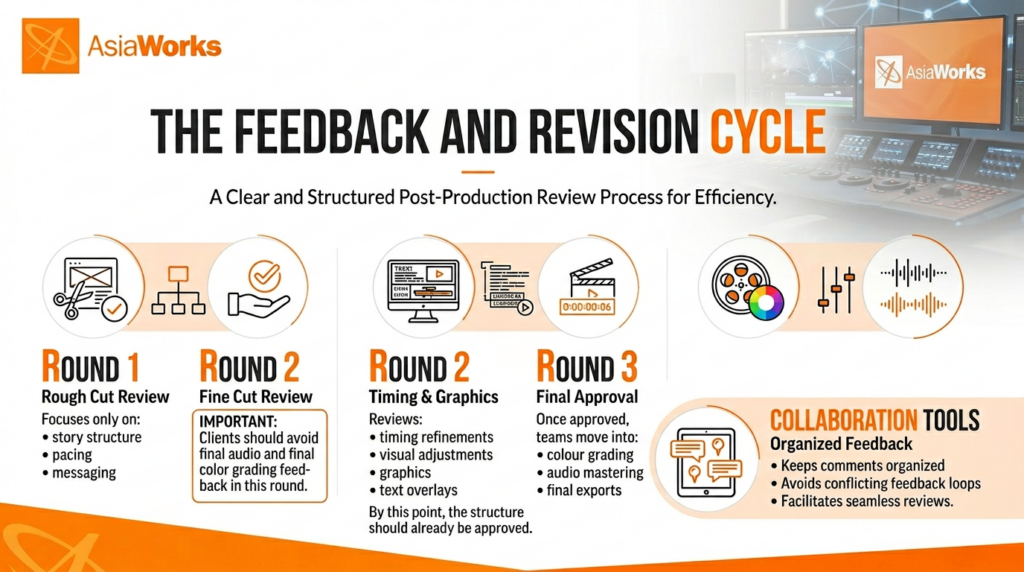
The Post-Production Feedback and Revision Cycle
One of the biggest challenges in video post-production is managing revisions efficiently.
Without structure, feedback becomes endless and confusing. At AsiaWorks, post-production follows a clear review process:
Round 1: Rough Cut Review
This stage focuses only on:
- story structure
- pacing
- messaging
Clients should avoid focusing on colour or final audio during this phase.
Round 2: Fine Cut Review
This stage reviews:
- graphics
- timing refinements
- text overlays
- visual adjustments
By this point, the structure should already be approved.
Round 3: Final Approval
Once the edit is approved, teams move into:
- colour grading
- audio mastering
- final exports
AsiaWorks uses collaborative review tools to keep comments organized and avoid conflicting feedback loops.
Understanding Video Post-Production Costs
One of the most common client questions involves video post-production costs.
The answer depends heavily on complexity.
Simple interview edits cost far less than productions requiring:
- motion graphics
- visual effects
- multi-language subtitles
- advanced sound design
- extensive revisions
Factors affecting pricing include:
- video length
- number of editing days
- graphics complexity
- audio cleanup requirements
- delivery formats
- revision rounds
Cutting corners during post-production can reduce the effectiveness of otherwise excellent footage.
At AsiaWorks, post-production is framed as an investment in audience perception and brand quality rather than simply a technical expense.
Editing for Multi-Platform Delivery
Post-production no longer ends with one final export.
Today, brands require content formatted for multiple platforms.
This includes:
- widescreen 16:9 videos for YouTube and websites
- vertical 9:16 edits for TikTok and Instagram Reels
- square formats for social feeds
Editors must also consider:
- mobile interface overlays
- subtitle placement
- logo positioning
- safe text zones
Accessibility is equally important. Many viewers consume social video entirely on mute. Therefore, captions and subtitles have become essential parts of professional delivery.
AsiaWorks frequently repurposes one production into multiple platform-specific edits to maximise campaign value.
Professional Post-Production Video Service at AsiaWorks
AsiaWorks operates as a full-service video post-production company supporting brands across Asia.
The agency integrates editing, sound design, graphics, colour grading, and platform delivery into one coordinated workflow.
AsiaWorks also provides practical video post-production tips for clients, including:
- quick turnaround of the first edit
- planning structured feedback rounds early
- preparing multiple aspect ratios for social delivery
- prioritising audio quality during production
- allowing time for subtitle and graphics revisions
The goal is not simply to finish a video. The goal is to ensure the content performs effectively across platforms and audiences.
Video Post-Production Checklist
Before approving a final video, review the following:
- Is the dialogue properly synced?
- Is the music balanced correctly beneath the speaker?
- Are all names, titles, and URLs accurate?
- Do colours remain consistent between scenes?
- Are captions included and accurate?
- Are all music tracks and stock footage properly licensed?
- Are exports optimized for multiple platforms?
A strong video post-production checklist helps avoid preventable delivery mistakes.
Final Thoughts from an Experienced Editor
The editing room is where stories truly come together. A great shoot with poor post-production is a wasted investment. A well-produced, professionally edited video remains a valuable brand asset long after publication.
Strong video editing and post-production transforms raw footage into content that feels emotional, professional, and strategically clear. Whether producing corporate videos, documentaries, explainers, or social campaigns, post-production directly shapes how audiences perceive a brand. A great video editor is literally who tells your brand story.
At AsiaWorks, post-production combines creative storytelling with technical precision. From sound design to colour grading and multi-platform delivery, our experienced editors help brands create polished content designed for a variety of audiences.
Video Post-Production FAQs
1) What is the difference between video editing and post-production?
Editing is one part of post-production. Post-production also includes sound design, colour grading, graphics, captions, and final delivery formatting.
2) How long does the post-production phase usually take?
Simple projects may take several days. Larger productions with graphics, multiple revisions, or complex audio work may require several weeks.
3) Who is involved throughout the post-production process?
Post-production may involve editors, producers, sound designers, motion graphics artists, colourists, and creative directors.
4) Can I hire an agency only for post-production support?
Yes. Many companies hire agencies specifically for editing and finishing services. However, full-service production often creates stronger creative consistency from filming through final delivery.